Finley
Every inbox in our lives has gotten smarter. Except one.

Finley is a smart mailbox system — a sensor built into the flag, paired with an app that brings the intelligence of a modern email inbox to your physical mail. Know when mail arrives. See what's in your box before you walk outside. Search your history. Unsubscribe from junk.
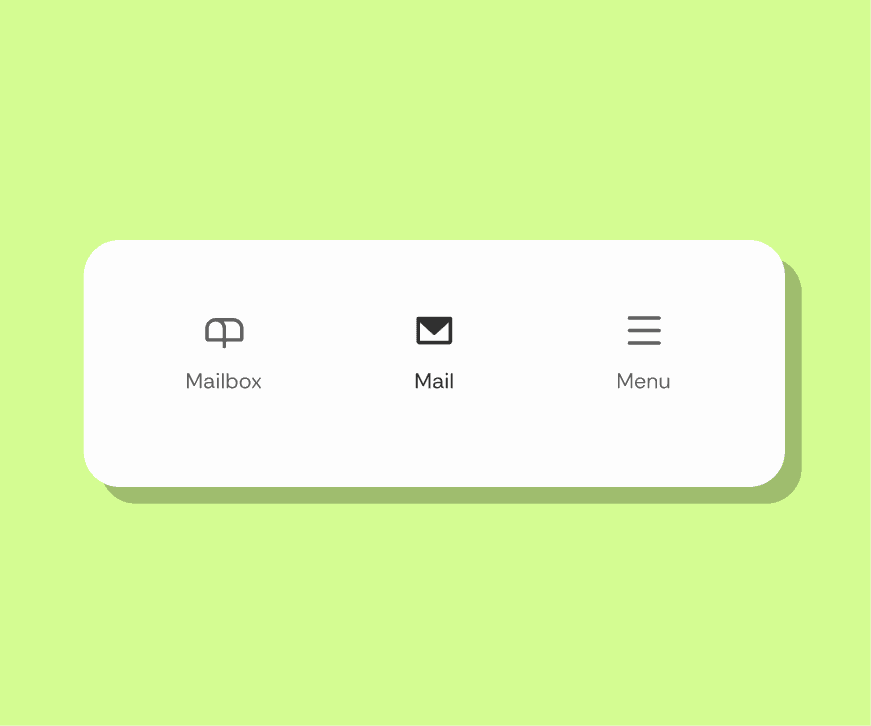
Control your mail
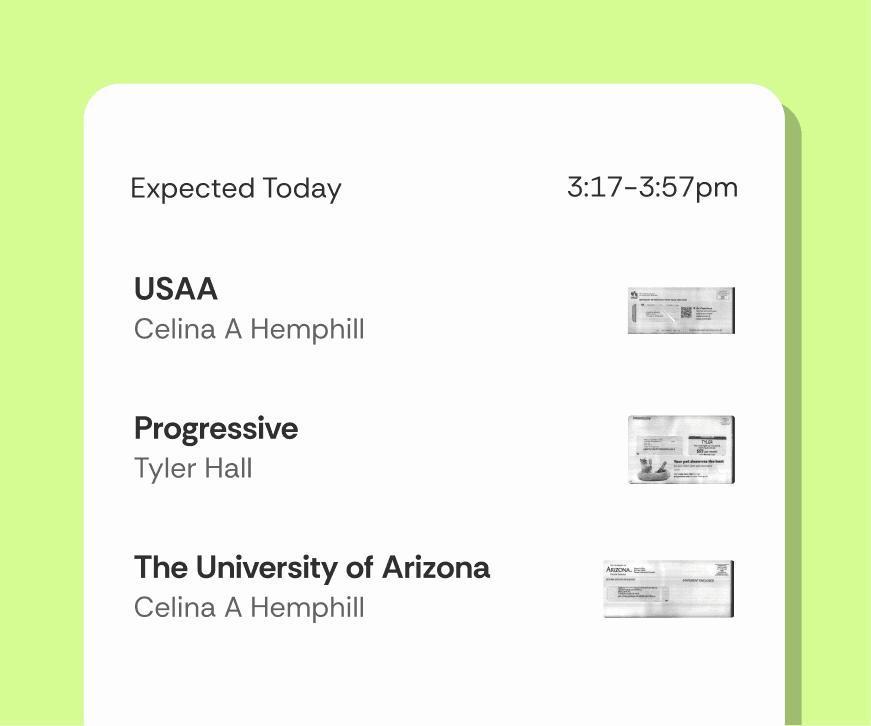
Know what's on the way
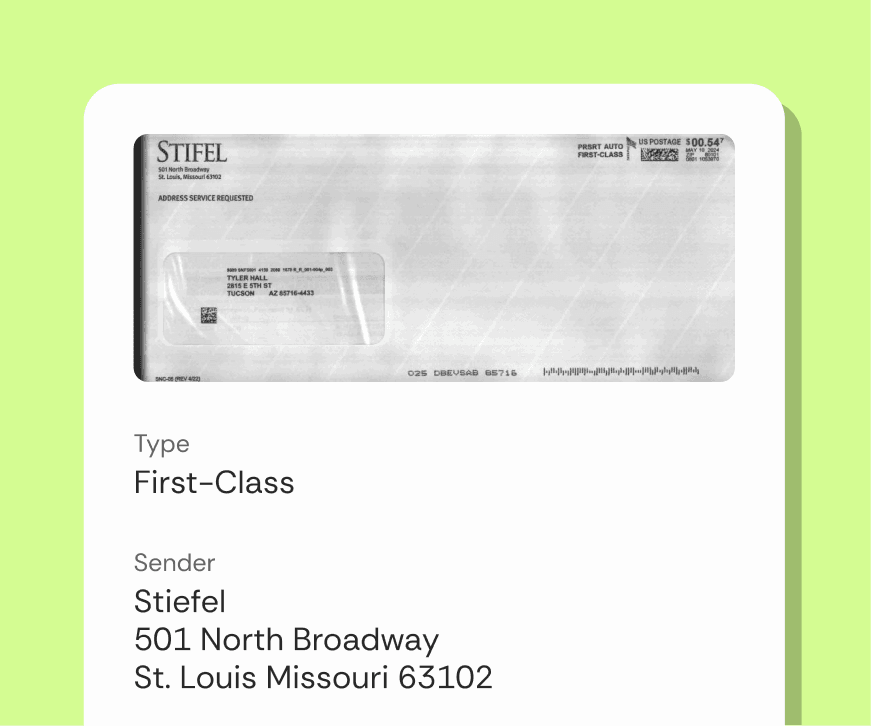
See what's been delivered
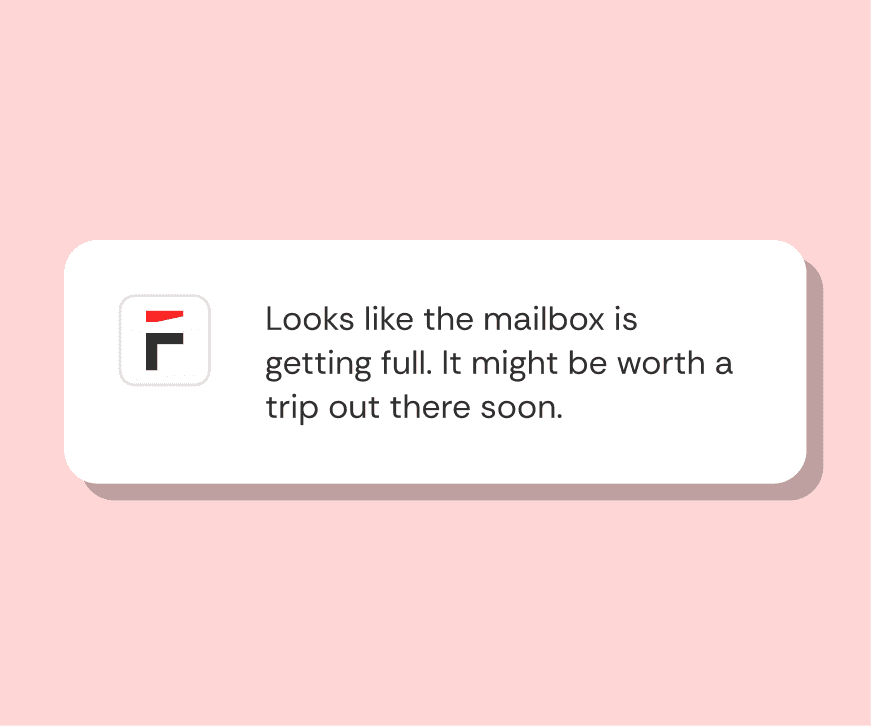
Set reminders

Flag what's important

Unsubscribe from junk mail
The idea
Smart home technology has reached thermostats, doorbells, and refrigerators. The mailbox got left behind — and the reason is simple: no reliable power source. Existing sensors exist, but batteries that die every 1-3 months aren't a trade-off most people bother making.

Beyond power, the software problem is just as real. No history. No search. No way to manage the junk piling up. USPS's Informed Delivery offers a daily digest of incoming mail — but it's a passive email with a 7-day memory and nothing you can actually do with it.
Why Now
A low-power chip in development by Efficient promises 1-2 years of battery life — compared to the 1-3 months that made existing solutions impractical. That changed the math entirely.
The Team
The founder previously co-founded SmartThings. The core team knew firsthand how connected devices live and fail in real homes. I joined as sole product designer — responsible for hardware concept iteration, app design, and the system connecting the two.
Research & Discovery
We started by looking at what existed and why it hadn't worked. Ring's mail alert had the same fundamental flaw as everything else — battery life measured in weeks. No existing solution had bothered to build a real software layer on top either. No history, no organization, nothing to do with the information.
The insight came from USPS Informed Delivery. The concept was right — daily previews of incoming mail — but the execution was a passive email digest sitting underused. We saw potential to do a lot more with it.
Hardware First
The first question wasn't what the app should look like. It was what we were actually building.


Early exploration pointed toward a custom mailbox — full control, ground-up solution. Also wrong. Professional installation, high manufacturing costs, a tiny addressable market. We needed something anyone could retrofit onto a mailbox they already had.
Focusing on the flag changed everything. Every standard mailbox has one, and its job — signaling that something changed inside — maps almost perfectly to what Finley needed to do. Building into the flag made installation a DIY job and cut costs significantly.
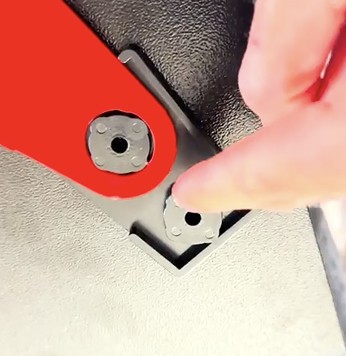


It also solved a harder engineering problem. The flag stem's natural geometry became the path for power and signal — a sensor inside the mailbox, wired through the stem to an antenna running the full length of the flag. The form factor isn't just practical. It is the architecture.
Then the App
Three non-negotiables from day one: authentication, device activation, and USPS Informed Delivery connection. Everything else built outward from there.

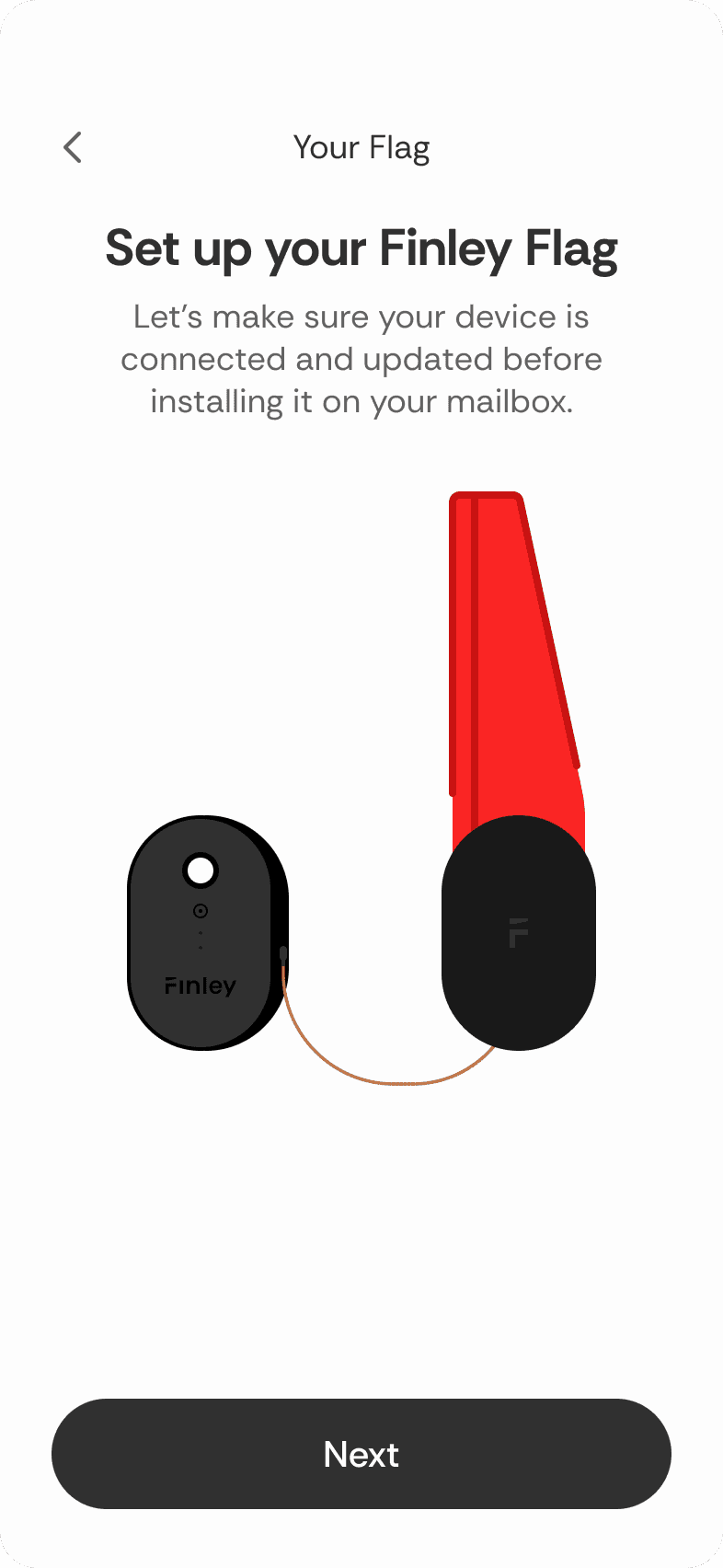
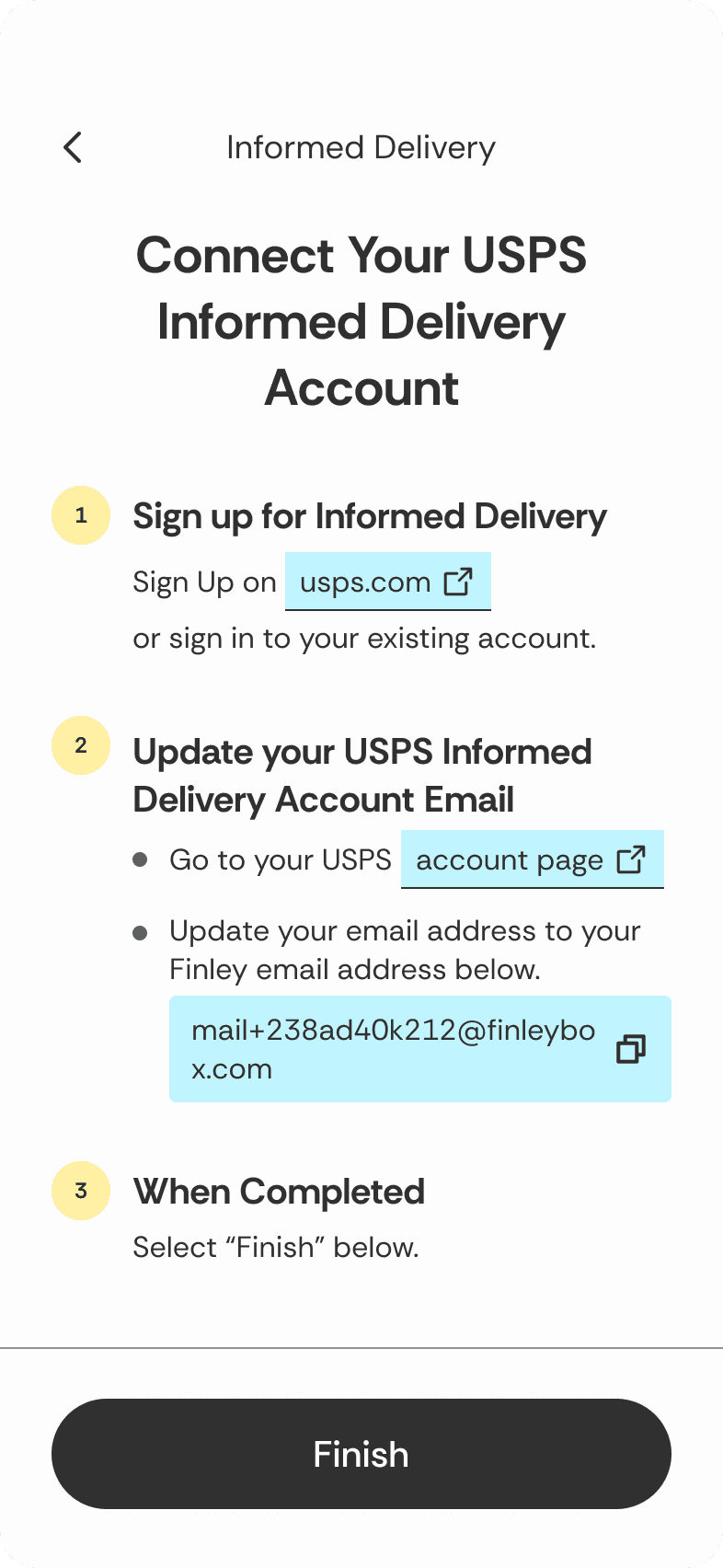
The question that reshaped the product: does the app need the device to be useful?
After sitting with it honestly — no. Searchable mail history, an unsubscribe flow, an organized inbox view — none of that required hardware. Making device-free signup an option reframed Finley from a mail sensor into a mail platform.
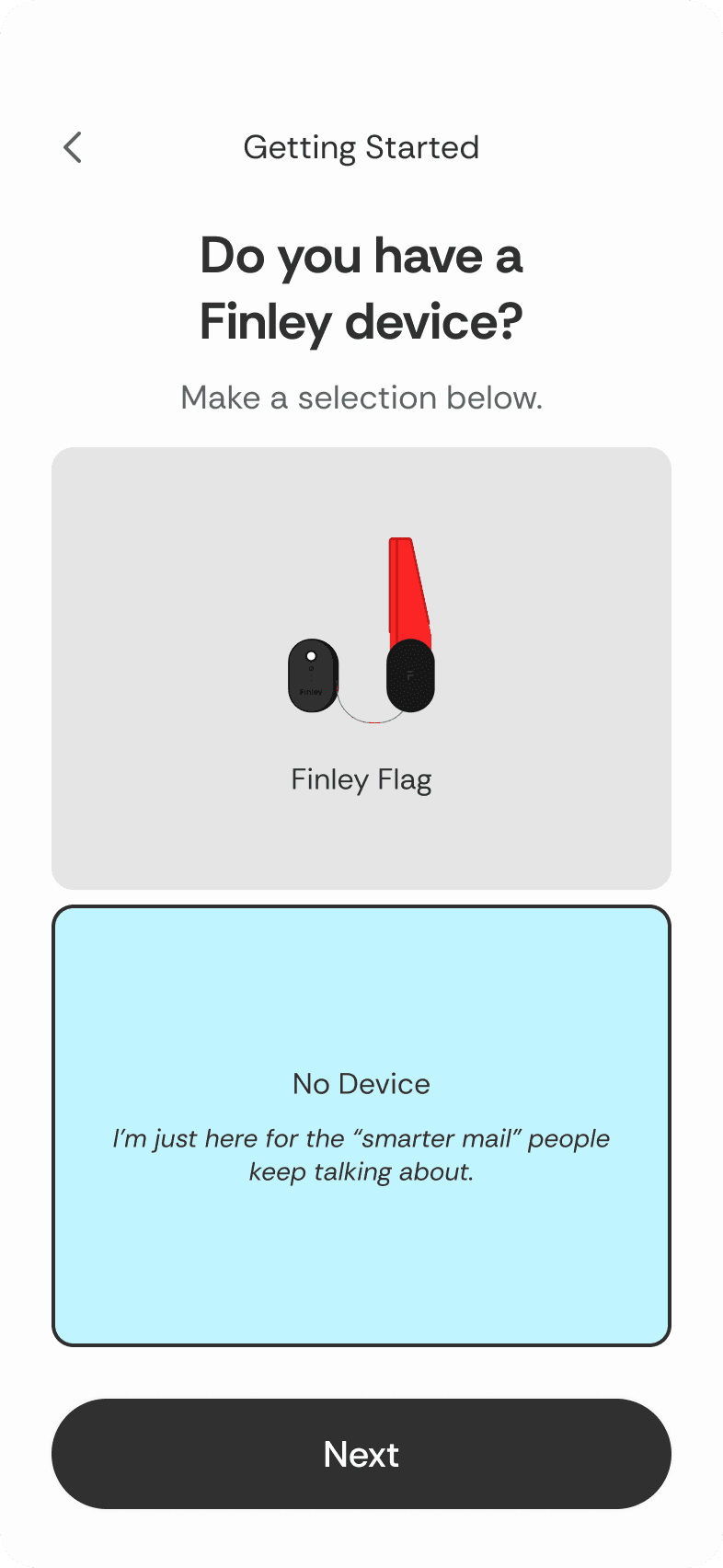

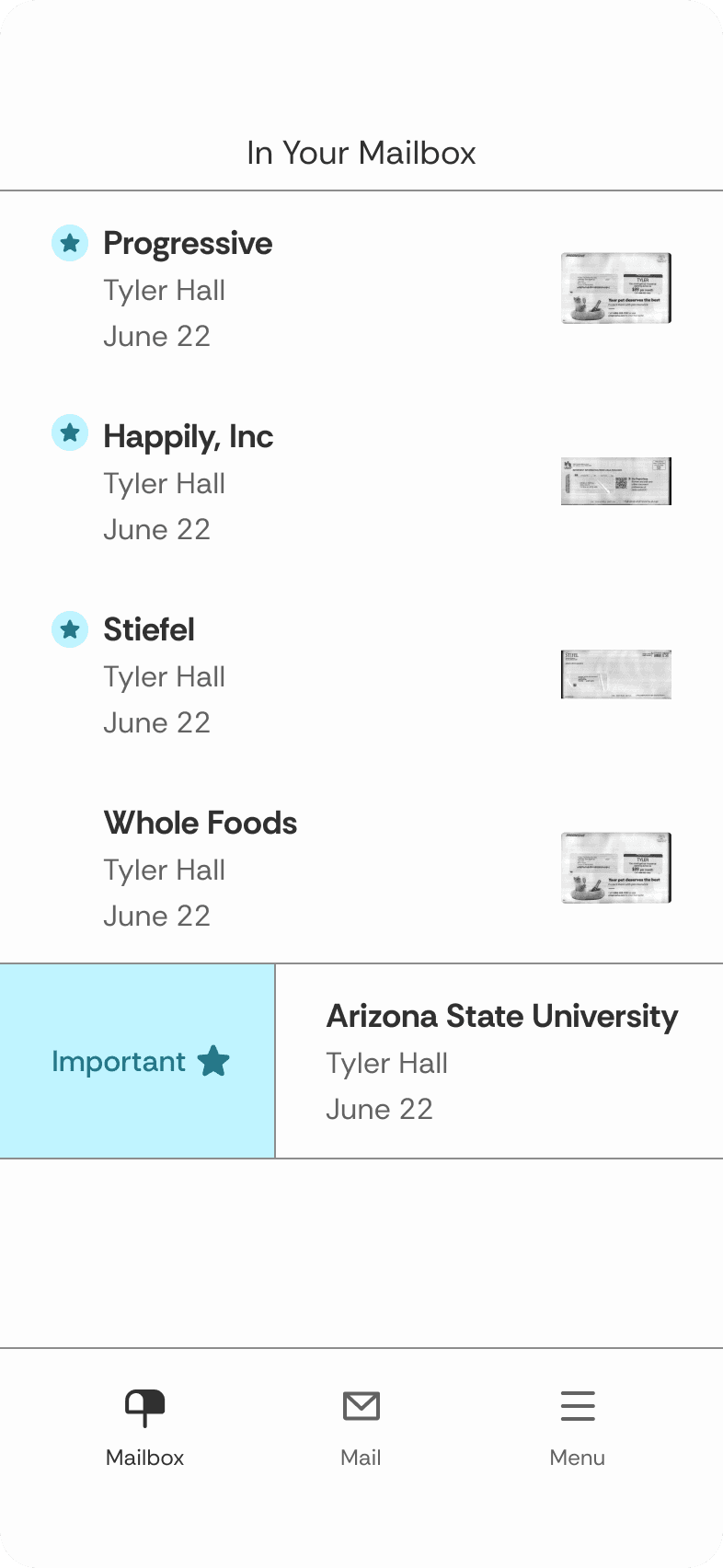
The hardware did shape one critical surface: onboarding. Setting up the sensor isn't possible without the app, so the activation flow had to be clear and confidence-inspiring — designed for someone on their phone,
Development is currently on hold. Changes to USPS's Informed Delivery service disrupted the core data pipeline — a reminder that building on infrastructure you don't control carries real risk.
The opportunity hasn't gone anywhere though. Physical mail is still the last unmanaged inbox in most people's lives.
Finley was one of the most complete design challenges I've worked on — hardware, software, a novel integration, and real product strategy decisions that changed what the product fundamentally was.